Besharam [shame-LESS] was my coming-out story, and it feels surreal to look back on how it all came together in 2023. For years, I’d kept a lot of my truth hidden, especially when it came to my queerness and my identity as a Pakistani man from a traditional Muslim background. But writing and performing Besharam [shame-LESS] was not just about telling my story—it was about owning it. It was about letting go of the shame that had weighed me down for so long and finally stepping into the light of who I truly am.
Pride in Doing the Work
There’s something incredibly empowering about creating your own work, especially when it’s so deeply personal. For me, this project was an act of self-love and acceptance. Writing Besharam [shame-LESS] was an exercise in being honest with myself and embracing the parts of me I’d once tried to hide. I didn’t know exactly what the outcome would be, but I felt this intense sense of pride every time I sat down to write. It was mine, and that felt powerful.
There was also a sense of responsibility. I wasn’t just telling my story; I was telling a story that resonates with so many others. So many queer people of colour struggle with issues of family, cultural expectations, and acceptance, and I wanted to reflect that in the show. It was important for me to create something that wasn’t just about my journey but could speak to anyone who’s ever felt marginalised or rejected because of who they are.
The Storytelling Process
Writing and performing a solo show is no small feat. The process of shaping Besharam [shame-LESS] into something that felt raw, real, and funny was incredibly challenging but so rewarding. I wanted to make sure that the audience could connect with the humour, the heartache, and the moments of discomfort. It wasn’t just about sharing my experiences—it was about creating a space where others could feel seen and heard too.
I’m so grateful to Jenn Wilson from Irregular Arts, who was an associate artist on this project and helped shape the narrative with me. Her guidance and insight during rehearsals were invaluable, helping me find the heart of the story in ways I hadn’t anticipated.
But equally, my director, Roann Hassani McCloskey, played an essential role in pushing the boundaries of what I thought was possible. Roann, a Mixed Race Algerian, Queer, and Muslim director, was a guiding force in the storytelling process. She didn’t let me off easy—she asked the hard questions, pushed me to dig deeper, and challenged me to face the uncomfortable truths I’d been avoiding. I’ll always be grateful for how Roann’s perspective and her gentle but firm approach helped me transform this show from something personal into something universal. The blend of our backgrounds and experiences brought so much depth to the work.
Impact on Me and Audiences
Besharam [shame-LESS] was a turning point in my life. Not only did it help me work through my own journey of coming out, but it also gave me a sense of purpose. The process of sharing my story with an audience in such a vulnerable way was healing. And the feedback I received from audiences was overwhelming.
Hearing from people who related to the themes of the show—whether it was about struggling with family expectations, finding your identity, or simply navigating the complexities of being queer in a South Asian context—was incredibly moving. I was not alone, and neither were they. That connection felt like an affirmation, not just for me as an artist, but for us as a community.
It was also deeply cathartic for me to put my ADHD into the performance. Sometimes, I’d blurt out things in frustration or excitement, but it felt so natural and real in the context of the show. It’s a part of who I am, and I was able to show that side of myself in a way I never had before.
Setting Up Dhamaka Arts
The success of Besharam [shame-LESS] was the beginning of something even bigger for me—Dhamaka Arts. I had always dreamed of starting a company that could create bold, inclusive, and thought-provoking theatre, and this show was the perfect launchpad for it. Dhamaka Arts is built on the idea of telling stories that amplify voices that are often overlooked, particularly queer people of colour. Through the company, I want to continue creating work that explores themes of identity, trauma, belonging, and love.
Besharam [shame-LESS] gave me the confidence to take this leap, and it has set the stage for future projects that dive even deeper into the complexities of being a queer person of colour navigating multiple identities. I’m so excited about where Dhamaka Arts will go and the kinds of stories we’ll get to share together.
Gratitude
I’d be remiss not to acknowledge the incredible team of people who made Besharam [shame-LESS] come to life. First and foremost, thank you to Bradford Producing Hub for the funding that made this work possible from the very beginning. A massive thank you to Theatre in the Mill for providing such a supportive rehearsal space, and to Kala Sangam for being the perfect venue to premiere the show and for supporting my artistic growth.
I’m incredibly grateful to Bradford Council and Arts Council England for their funding and belief in my work. Without this support, none of this would have been possible.
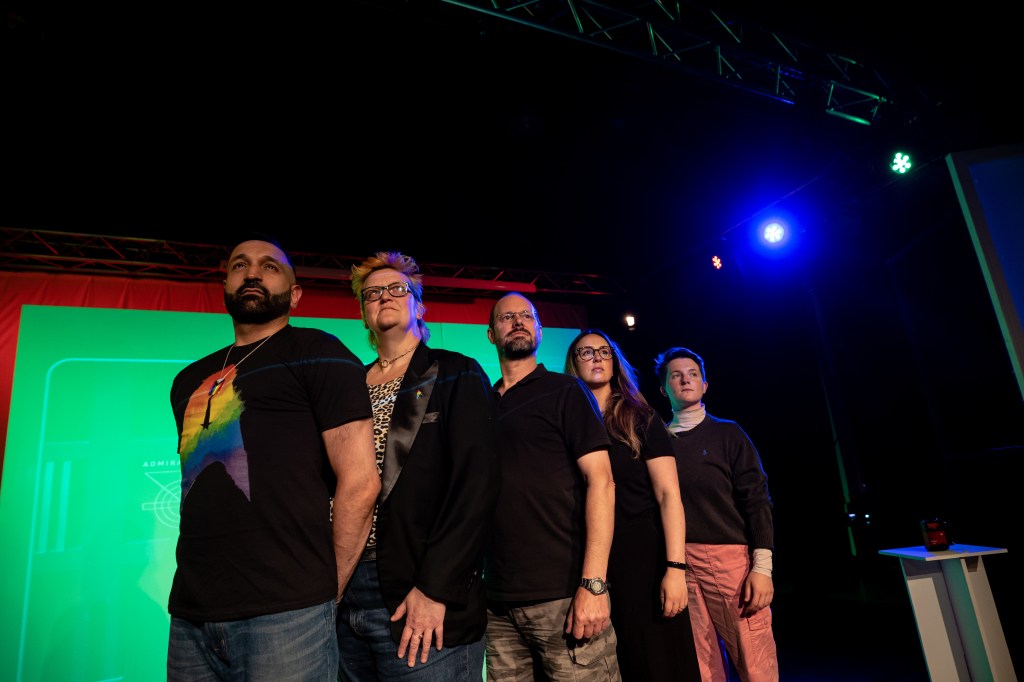
My team—Jenn Wilson, Roann Hassani McCloskey, David Shopland (my producer), Ollie Ade, Darren Pritchard, Tullah Harris, and Dave Searle—has been incredible. Each of them played an essential part in making Besharam [shame-LESS] come to life, and I couldn’t have done it without their talent, dedication, and support.
So, here I am, looking back on a year that’s completely changed my life. Besharam [shame-LESS] was just the beginning, and I’m excited to see what comes next. To anyone who has seen the show, supported me, or related to the story in any way—I’m grateful. You’re the reason this work exists.
And for those of you still struggling with your own journey, just know that there’s space for you, too. You’re not alone.
With love,
Sid Akbar
 Dhamaka Arts