There’s a particular kind of exhaustion that comes from being misunderstood. Not loudly, not dramatically, but quietly… politely… professionally misunderstood. Recently, I was asked to step away from my acting class for a term. Not after a conversation or a check-in… just a decision. The reason? I wasn’t “in the right headspace.” But when I asked for clarity, what emerged was my ADHD.
But I need to be honest about what that decision unleashed. It wasn’t just disappointing; it was crushing. ADHD doesn’t just disappear, and when I’m told I don’t fit, the weight hits my chest, my shoulders, my entire being. It’s overwhelming, panic rises, rejection sensitivity (RSD) spikes, and the mental exhaustion is real. It feels like my entire day is thrown off course heavier, harder. And it’s not a one-time hurdle; it’s a block I have to climb over again and again. This is the toll it takes, and it’s one that could be avoided if we built spaces that understood.
I was told I had a “cloud” over me, that I was disruptive, that I needed to be more “professional.” Yet I am professional. I’ve built shows, secured funding, carried stories. I know how to hold a space. But I also thought, perhaps naively, that an acting class was the one place I didn’t have to perform being manageable.
ADHD isn’t a quirk. It’s regulation. It’s stepping out to ground myself. It’s navigating focus, energy, impulse, emotion, all in real time. It’s constant, invisible work. I didn’t need perfection, I needed understanding. Or at least curiosity. Instead, I received a decision, one many neurodivergent people know: “You’re valued, but not like this.”
And here’s where it gets complicated. The people involved aren’t bad. There was care, kindness, even apologies. But impact doesn’t dissolve because intention was soft. You can be well-meaning and still get it wrong.
When I asked what their understanding of ADHD was, or what gave them the confidence to make a decision about my mental health without a conversation, the response caught me off guard.
I was told there were several other people in the class with ADHD, and that they were all different.
And I remember sitting there, a bit stunned.
Because that logic felt uncomfortably familiar. It’s the same kind of reasoning as “I’m not racist, I have a Black friend.” It reduces something complex and deeply individual into proximity, rather than understanding.
It wasn’t said with malice. But it landed with a kind of ignorance that was hard to ignore.
Because being around neurodivergent people isn’t the same as understanding them.
And good intentions don’t replace knowledge, care, or the willingness to learn what hurt was being decided about, not spoken with. And yes, this impacted my learning, development, and growth. When a space meant to support you pushes you out, you lose momentum, exploration, and room to grow.
But that clarified something important: I’m not too much. I’m just not for spaces that don’t grow. And that’s the real question for our industry: We talk about adapting, but how do we adapt broadly if we don’t start in our own rooms? In classrooms, rehearsals, ensembles, some needs require more support. It’s on organizations to adapt.
That’s what Dhamaka Arts is about: expanding, adapting, listening, holding space. Bringing in skilled people who understand neurodiversity not just for me, but for everyone, so we grow together. That’s something I learned in theatre young and still carry: we hold each other. We adjust. We meet each other where we are. We make the work together. Not in spite of difference because of it
I don’t want to be in rooms where I edit myself to belong. I want to build rooms where people arrive as they are and are met there. Where being human isn’t a disruption, it’s the starting point. That’s the future we can create, and it starts right here, in every room we shape together.
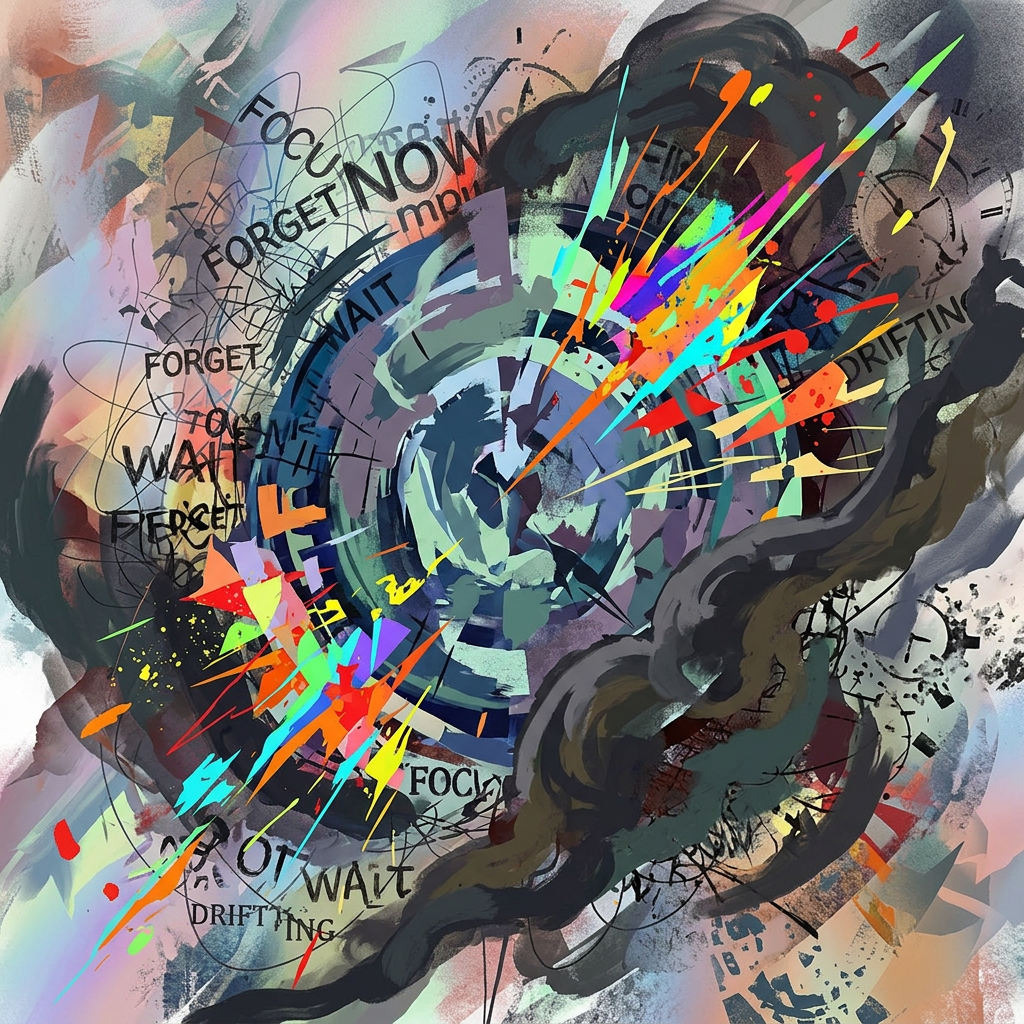
What I image my adhd overwhelm and deregulation looks like.
 Dhamaka Arts